
Finding the right height for a pendant light is one of those details that separates carefully designed spaces from ones that feel slightly off. The good news is that reliable guidelines exist, and once you understand the principles behind them, you'll be able to adapt them confidently to any situation.
The 75-90 cm rule forms the foundation. From there, adjustments based on ceiling height, room function, and personal preference help you find the exact position where your pendant light truly shines.
Understanding the 75-90 cm rule
The standard guideline for pendant light height above tables and islands is simple: hang the bottom of the fixture 75 to 90 cm (roughly 30-36 inches) above the surface below.
This range exists for good reason. At 75 cm, the pendant creates an intimate connection with the table or island, casting focused light on the work surface while establishing a clear relationship between fixture and furniture. At 90 cm, the pendant feels slightly more elevated, providing broader light diffusion while still maintaining that visual link.
Within this range, the exact height depends on several factors: the size and style of the pendant, the height of the people using the space, the overall ceiling height, and personal preference for an intimate versus open feel.
The rule applies specifically to pendants over horizontal surfaces like dining tables, kitchen islands, breakfast bars, and desk areas. Pendants in other locations, such as entryways, stairwells, or living rooms without a surface below, follow completely different guidelines.
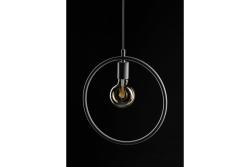





Why height matters so much
Pendant light height affects both function and aesthetics in ways that ripple through the entire room.
Functionally, height determines how light falls on the surface below. A pendant hung too high spreads light too broadly, reducing intensity where it's needed and potentially creating glare as the bulb becomes more visible from seated positions. A pendant hung too low concentrates light in a smaller area, which can create harsh shadows and definitely obstructs sightlines across the table.
Aesthetically, height establishes the visual relationship between the pendant and the furniture below. The fixture should feel connected to the table or island, part of the same compositional unit. If it's too high, that relationship breaks down: the pendant floats in space without apparent purpose. If it's too low, the pendant dominates, becoming an obstacle rather than an enhancement.
The 75-90 cm range creates that connection while maintaining practical clearance. It positions the fixture close enough to relate visually to the surface below, but high enough to avoid interfering with activities or sightlines.
Adapting to ceiling height
A standard ceiling height of about 2.4 metres naturally accommodates the 75-90 cm guideline. The pendant hangs at a comfortable height above the surface, leaving reasonable space between the fixture and the ceiling.
Higher ceilings require adjustment. At 2.7 metres or more, hanging a pendant only 75-90 cm above the table can leave an awkward gap between the fixture and the ceiling. The pendant ends up feeling stranded, failing to adequately fill the vertical space.
For every additional 30 cm of ceiling height beyond standard, consider raising the pendant by about 7-10 cm. A 3-metre ceiling might justify hanging the fixture 97-107 cm above the surface. A 3.6-metre ceiling could push that to 107-122 cm or even higher.
The goal is balance between the space above the pendant and the space below. Neither should feel disproportionately empty or cramped.
Lower ceilings present the opposite challenge. With only 2.2 or 2.3 metres available, even 75 cm above the table might leave insufficient clearance between the top of the pendant and the ceiling. In these situations, choose low-profile fixtures and consider hanging at the upper end of the range or slightly higher. Flush-mount or semi-flush alternatives may work better than true pendants in very low-ceiling situations.
Kitchen island specifics
Kitchen islands present particular considerations because people use them both seated and standing.
When the island functions primarily as an informal dining spot or seating area, the standard 75-90 cm guideline applies. Measure from the island surface to the bottom of the pendant, aiming for the lower end of the range for intimate task lighting or the upper end for a more open feel.
When the island functions primarily as a workspace where people stand to prep food, extra clearance helps. Standing position brings eyes and head higher than seated position, and prep work often involves reaching and movement. Consider a height of 86-102 cm above the surface for islands used mainly for food preparation.
Many islands serve both purposes, with seating on one side and workspace on the other. In these cases, positioning pendants toward the seating side and hanging them at standard height often works best. Seated people benefit from appropriate fixture height, while those working on the opposite side have adequate clearance.
For multiple pendants over a long island, maintain uniform height across all fixtures. Staggered heights might work for decorative effect in some contexts, but on functional surfaces, uniform placement generally looks better and performs better.
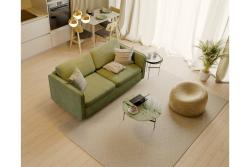
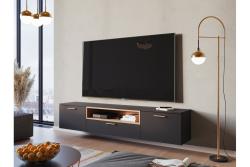


Dining table considerations
Dining tables are the classic pendant light application, and the 75-90 cm rule was developed largely with this use in mind.
Round tables centre beautifully under single pendants. The fixture hangs directly above the table's centre, creating a focal point that emphasises the table's geometry. Height within the standard range depends on the pendant's diameter and the desired intimacy. Larger pendants often benefit from being hung slightly higher; smaller ones can sit lower without overwhelming the space.
Rectangular tables pair well with either single elongated pendants or multiple fixtures arranged in a row. For multiple pendants, space them evenly along the table's length, typically 60-75 cm apart, and maintain consistent height. The combined arrangement should relate to the table as a unified composition, with the pendants spanning roughly two-thirds of the table's length.
Consider the dining experience you want to create. Lower pendant positions create a more intimate atmosphere, drawing attention inward and creating a cosy feel suited to dinner parties and focused conversation. Higher positions create a more open, casual atmosphere suited to everyday family meals and gatherings where people come and go.
Breakfast bars and counter seating
Breakfast bars and counter seating add a variable that tables don't have: the counter itself is typically higher than standard table height.
Standard table height is about 75 cm. Counter height is typically 90-95 cm. Bar height reaches 105-110 cm. These differences affect how the 75-90 cm guideline applies.
For counter-height surfaces, maintain the 75-90 cm measurement from the counter surface to the bottom of the pendant. The total height from floor to fixture will be greater than above a standard table, but the relationship between pendant and surface stays consistent.
For bar-height surfaces, the same principle applies, though the practical result places pendants fairly high in the room. This can feel appropriate in spaces designed around bar seating but may feel out of place in rooms where the bar is a secondary feature.
In all counter and bar applications, consider the sightline of seated people. Higher seated positions mean eyes are higher up, making it more likely that low-hung pendants will obstruct the view. When in doubt, opt for the higher end of the acceptable range.
Pendants for entryways and hallways
Entryway pendant lights don't hang above surfaces, so the 75-90 cm rule doesn't apply directly. These high-impact applications are governed by different guidelines.
The minimum distance from the floor to the bottom of the pendant is typically 210 cm (about 7 feet). This ensures even the tallest visitors can pass underneath without risk of contact. In high-traffic areas or homes with particularly tall residents, increasing this distance to 215-220 cm provides additional safety margin.
Beyond the minimum clearance, the aesthetic goal is to position the pendant where it creates maximum impact without overwhelming the space. In standard-height hallways, this often means hanging the fixture relatively high, leaving it room to breathe above and below.
In double-height hallways and entrance halls with very tall ceilings, pendants can drop much lower while still maintaining floor clearance. A large pendant dropping from a 5-metre ceiling to hang at 250-280 cm creates a stunning vertical effect. The fixture fills the space, draws the eye upward, and creates an effect impossible to achieve in rooms with lower ceilings.
Staircase pendants follow similar principles but must account for changing floor levels. The lowest point of the fixture must clear the highest step that users will walk, which typically requires careful measurement along the staircase's path.
Living room and bedroom pendants
Living room and bedroom pendants are rarely hung above tables or surfaces, which places them in the same category as hallway fixtures.
Central pendants in these rooms should maintain a minimum floor clearance of 210 cm to ensure safe passage. Beyond that minimum, height becomes a design choice. Higher positions create a more open, airy feel. Lower positions, where space allows, create intimacy and a focal point.
Bedside pendants follow completely different rules. These fixtures are usually hung fairly low, sometimes as little as 30-45 cm above the bedside table surface, providing reading light at an appropriate angle. The 75-90 cm guideline might apply if measuring from the bedside table, but the priority is the functional position of the reading light rather than visual proportion relative to the surface.
Living room pendants over coffee tables can follow the dining table guideline, though a higher placement often feels more appropriate given the casual, varied use of living spaces. 102 to 122 cm above the coffee table provides light without interfering with people reaching for or setting down drinks.
Factors related to fixture size and style
The fixture itself influences the ideal hanging height.
Large pendants with significant visual weight often benefit from being installed slightly higher within the acceptable range. Their size ensures impact even from a greater distance, while lower placement can feel overwhelming.
Small pendants can hang lower without overwhelming the space. Their modest size allows for closer placement while still maintaining proper proportions.
Pendants with exposed bulbs or open bottoms generally work best in higher positions. Viewed directly from below, the bare bulb creates glare. Greater height diverts the sightline from the light source.
Pendants with opaque or translucent shades that conceal the bulb tolerate lower positions more easily. The shade diffuses and directs the light, reducing the glare issue regardless of viewing angle.
Sculptural pendants, appreciated as much for their form as their light, may benefit from placement that optimises their visual appreciation. That might mean hanging them higher to reveal their shape, or lower to create intimacy with the object, depending on the specific design.
The practical measuring process
Measuring for pendant light installation follows a logical sequence.
First, determine the surface height. Measure from the floor to the top of the table, island, or counter where the pendant will hang. Standard tables are about 75 cm tall, counters about 90 cm, bar counters about 105 cm.
Second, calculate the desired height for the bottom of the pendant above that surface. The 75-90 cm range serves as the starting point. Adjust based on ceiling height, fixture size, and functional priorities as discussed earlier.
Third, measure your pendant to determine the total length needed for hanging. Measure from the ceiling rose to the bottom of the shade or lowest element. Many pendants come with adjustable cords or rods allowing fine-tuning after installation.
Fourth, calculate the total distance from the ceiling to the bottom of the pendant. This equals the surface height plus the desired clearance above the surface. For a standard 75 cm table with 80 cm of clearance for the pendant, the bottom of the fixture should sit 155 cm from the floor.
Fifth, verify that this position leaves adequate space between the top of the pendant and the ceiling. If the pendant would hang too close to the ceiling, consider a lower-profile fixture or adjust the hanging height.
Common mistakes to avoid
Hanging too high is perhaps the most common mistake. Pendants positioned 102, 114, or even 127 cm above tables lose their connection to the surface below. They float purposelessly, providing ambient light but failing as a focal element. When in doubt, it's better to err toward the lower end of the acceptable ranges than the higher end.
Hanging too low creates different problems. Pendants that block sightlines across tables make conversation awkward. Fixtures that interfere with activities or movement make everyday use frustrating. People should never have to duck or peer around their lighting.
Ignoring ceiling height leads to uncomfortable proportions. The space above the pendant matters just as much as the space below. Adapting to ceiling height creates balanced compositions rather than fixtures stranded in vertical voids.
Inconsistent heights across multiple pendants read as careless. Whether hung in a row over an island or on either side of a bed, matching fixtures should hang at uniform heights. Use a spirit level or laser during installation to ensure precision.
Forgetting the bulb's position within the pendant leads to glare issues. The bottom of the fixture isn't necessarily where the light originates. Consider where eyes actually meet the brightness and adjust accordingly.
Fine-tuning after installation
Many pendant light installations allow for adjustment after initial mounting. Take advantage of this flexibility to refine the placement.
Live with the initial height for several days before making changes. Use the space normally, sit at the table, work at the island, walk through the room. Notice whether the pendant interferes with activities or sightlines. Observe whether the light falls where you need it.
Make small adjustments rather than drastic changes. Moving a pendant 5 cm often resolves an issue that felt significant. Large changes usually indicate the initial calculation missed something fundamental.
Consider different members of the household. A height that works perfectly for shorter family members might obstruct the view for taller ones. Find the compromise that works for everyone.
Evaluate at different times of day and under different lighting conditions. A pendant might feel correctly positioned during daytime but too bright or too dim when it's the primary light source in the evening.

The 30-36 inch rule provides a reliable starting point for pendant positioning, but thoughtful application matters more than rigid adherence. Your ceiling height, fixture style, functional requirements, and personal preferences all influence the ideal height for your specific situation.
The goal is a pendant that feels intentionally placed, connected to the surface below while providing appropriate illumination and maintaining clear sightlines. When positioning is right, you don't notice it. The light is where it should be, the fixture relates naturally to the furniture, and the room feels coherently designed.
Take time to measure carefully, consider the factors that affect your specific space, and be willing to adjust after installation. The small effort required to get pendant height right pays dividends every time you use the room.


