Why Limescale Is More Visible on Beige Sinks
Limescale forms when minerals in hard water dry and settle on the surface. On beige sinks, this buildup creates contrast, making it more noticeable.
Instead of a clean, uniform tone, you may see:
- Cloudy patches
- White or chalky residue
- Uneven areas near the drain or edges
Best Method to Remove Limescale Without Damaging the Surface
The key is to let cleaning products do the work rather than scrubbing aggressively.
Step-by-Step Cleaning Process
- Apply a mild descaling solution or vinegar-based cleaner
- Let it sit for a few minutes (do not scrub immediately)
- Use a soft cloth or sponge to gently wipe the area
- Rinse thoroughly with clean water
- Dry completely with a microfiber cloth
This method removes buildup while preserving the sink’s finish
What Works Best for Beige Sink Cleaning
|
Cleaning Method |
Effectiveness |
Risk Level |
Best For |
|
Vinegar solution |
High |
Low |
Light to moderate limescale |
|
Mild descaler |
Very high |
Low |
Stubborn buildup |
|
Baking soda paste |
Medium |
Low |
Spot cleaning |
|
Abrasive cleaners |
High |
High |
Not recommended |
Removing Stubborn Limescale (Without Marks)
When buildup has been left for longer, the solution is not force — it’s repetition.
Instead of scrubbing:
- Reapply the cleaning solution
- Allow more time for it to break down minerals
- Work in small sections
- Repeat if needed
This prevents uneven cleaning and keeps the surface consistent.
Common Mistakes That Leave Marks
Many people remove limescale but end up with streaks or dull patches.
Avoid these mistakes:
- Not rinsing the surface properly
- Letting cleaning solution dry on the sink
- Using rough sponges or steel wool
- Applying too much pressure
How to Prevent Limescale from Coming Back
Prevention is simple and makes a huge difference over time.
Daily & Weekly Habits
- Rinse the sink after use
- Dry the surface with a soft cloth
- Avoid letting water sit for long periods
- Clean lightly once or twice per week
|
Habit |
Impact on Limescale |
Effort Level |
|
Drying after use |
Very high |
Low |
|
Weekly gentle cleaning |
High |
Low |
|
Deep cleaning monthly |
Medium |
Medium |
|
Ignoring water residue |
Negative |
None |
Why Material Quality Matters
Not all sinks react the same way to limescale.
High-quality sinks (like composite or treated stainless steel) offer:
- Better resistance to mineral buildup
- Easier cleaning
- More consistent surface finish
Design-focused collections such as Pure.Sink are built with both durability and maintenance in mind, helping reduce visible wear over time.
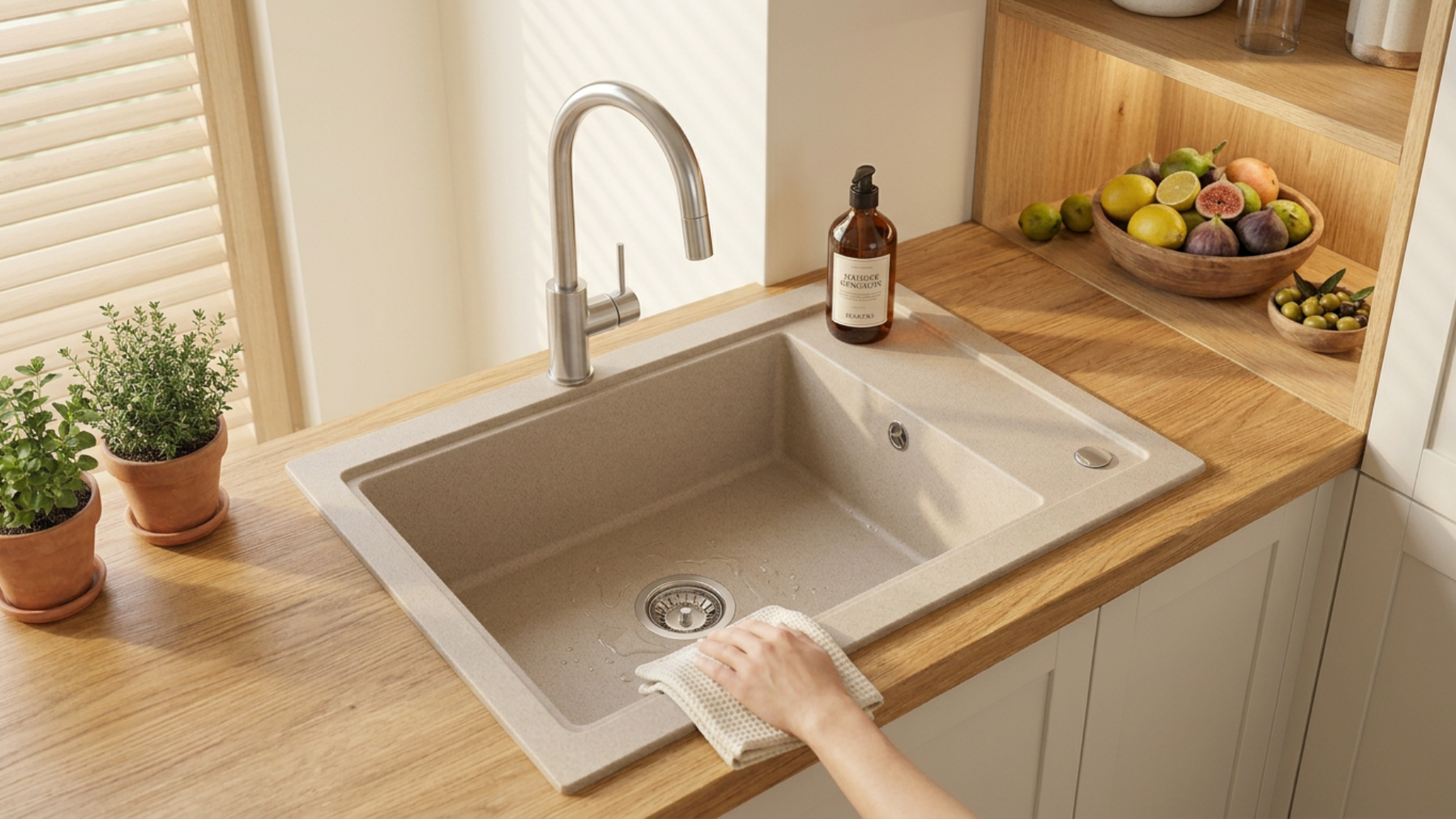
Removing limescale from a beige sink is not about using stronger chemicals or scrubbing harder. It’s about using the right method consistently and respecting the surface.
When done correctly:
- The sink maintains its smooth, even tone
- Marks and streaks are avoided
- Cleaning becomes faster over time
A beige sink can stay elegant and refined for years, as long as care is gentle, consistent, and well understood. Small habits make the biggest difference — and over time, they preserve both the appearance and the experience of your kitchen.
Common Questions About Removing Limescale from Beige Sinks
Can vinegar damage a beige sink?
No, when diluted and used correctly, it is safe for most surfaces.
Why do marks appear after cleaning?
Usually due to residue not being rinsed or dried properly.
How often should I remove the limescale?
Light cleaning weekly, deeper cleaning monthly if needed.
Can I use abrasive sponges?
No, they can damage the surface and create dull patches.
Is limescale permanent?
No, it sits on the surface and can be removed with proper care.