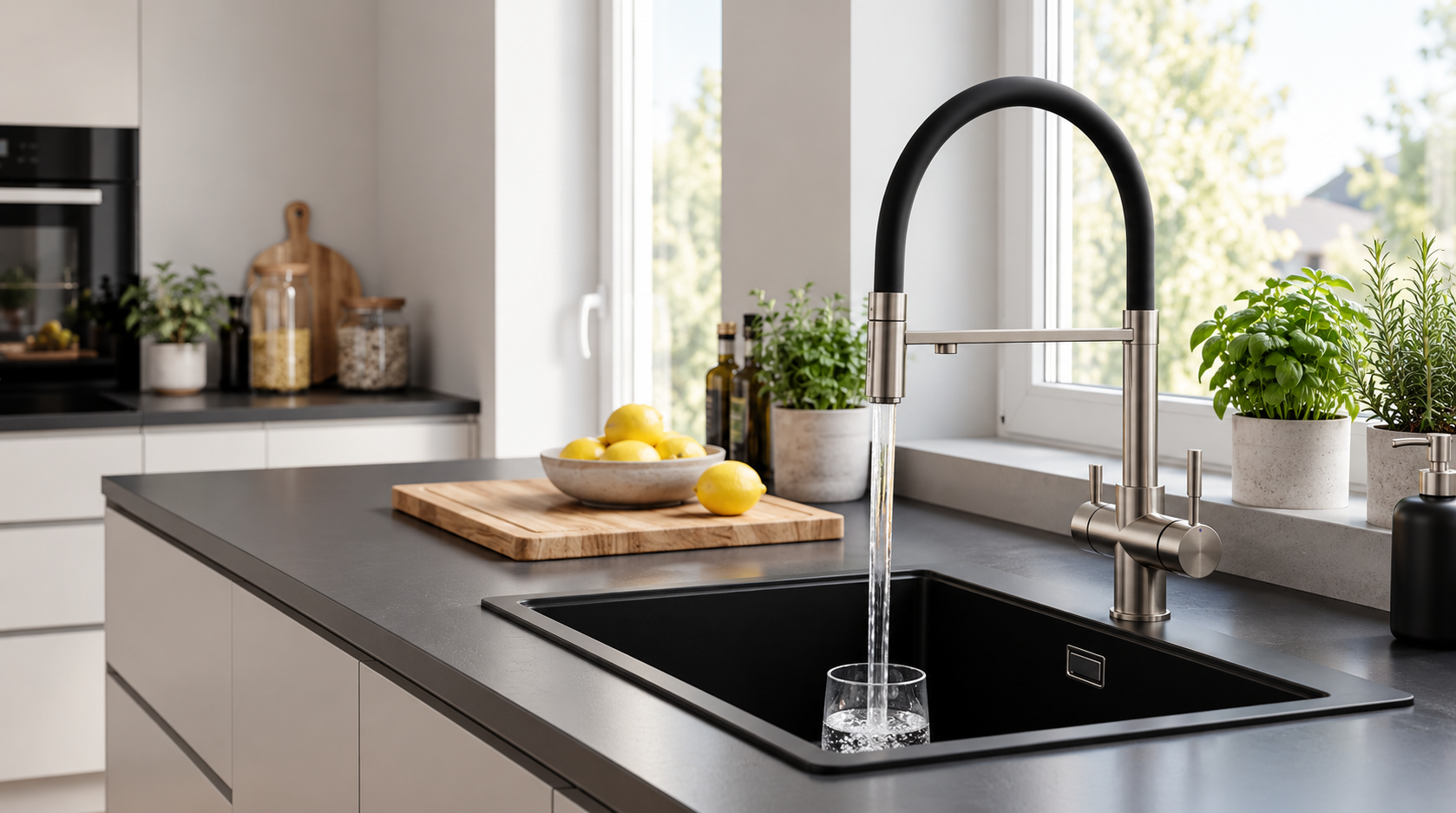
A 3-way filter tap delivers hot, cold, and filtered water from a single spout, switching between them with a separate lever or a second handle. It needs a dedicated filter unit installed under the sink, connected to the cold water supply, plus enough cabinet space to fit that filter alongside existing plumbing. Before buying one, check under-counter space, your water pressure, and whether the tap you want is sold with a compatible filter system or requires one purchased separately.
What "3-Way" Actually Means
A standard kitchen mixer tap is 2-way: hot and cold, blended through a single spout. A 3-way filter tap adds a third water path, filtered cold water, routed through a cartridge filter installed under the sink before it reaches the tap. The spout itself usually has a separate small lever or a secondary handle that switches the output to the filtered line, keeping it physically separate from the hot and cold mixer valve so filtered and unfiltered water never combine.
This is different from an inline filter fitted to a separate, dedicated filter tap mounted beside the main one. A 3-way tap combines both functions into a single spout and a single hole in the sink or counter, which is the main practical appeal: one fitting instead of two.
How the System Works, Start to Finish
- Cold water supply is split under the sink, with one line continuing to the tap's normal cold valve as usual, and a second line diverted into the filter unit.
- The filter cartridge, housed in a canister mounted to the cabinet wall or sitting on the cabinet floor, removes chlorine, sediment, and other contaminants depending on the cartridge's specification.
- Filtered water travels up a separate line to the tap's third valve or lever, kept isolated from the hot and cold lines inside the tap body.
- At the tap, switching to the filtered setting, usually a small lever on the side or top of the spout, redirects flow through that separate internal channel rather than the mixer valve.
Because the filtration happens entirely under the counter, the tap itself doesn't need an internal filter cartridge the way a standalone filter jug or a built-in filter spout does. The tap is essentially a switch; the filtering is done by the unit below.
What You Need Under the Counter Before Buying
Cabinet space. The filter unit, canister plus mounting bracket, typically needs roughly 20-25cm of vertical clearance and a flat mounting surface on the cabinet wall or floor. Check this against your actual under-sink cabinet before ordering, particularly if it's already crowded with a waste disposal unit, water softener connection, or bin system.
Water pressure. Filter cartridges add resistance to water flow, so very low incoming water pressure can result in a noticeably slower fill rate from the filtered setting specifically, even if the hot and cold sides feel normal. This matters more in older properties or upper-floor flats with naturally lower mains pressure.
An accessible shut-off valve. The filter line needs its own isolation valve under the sink, separate from the main cold supply, so the cartridge can be changed or the system serviced without shutting off water to the rest of the kitchen.
Drain proximity, for some filter systems that include a flush or waste line during cartridge changes. Not all models need this, but it's worth checking the specific system's installation requirements before assuming a straightforward fit.

Choosing a Compatible Filter System
Not every 3-way tap is sold as a complete package with its matching filter unit. Some are designed to work with a specific manufacturer's filter cartridge system, filter tap and filter sold separately or together, while others are built to accept a wider range of standard cartridge types.
Check for:
- Whether the tap is sold bundled with a filter unit, or requires one purchased separately
- Which cartridge types the system accepts, since a tap built for one proprietary cartridge system locks you into buying replacements from that same source going forward
- The cartridge's rated capacity (commonly expressed in liters filtered before replacement is needed) and how that maps to your household's actual water use
- What the cartridge actually filters, chlorine and sediment are standard, but limescale reduction, microplastics, and other contaminants vary by cartridge and aren't universal across all systems
Installation: What's Involved
Installing a 3-way filter tap is more involved than swapping a standard mixer tap, since it adds the filter unit, its mounting, and an additional water line under the sink, on top of the tap itself.
- The tap mounts through a single hole in the sink or counter, same as a standard single-hole mixer, so existing single-hole sinks are generally compatible without modification.
- The filter unit mounts separately under the sink, requiring its own bracket installation and a tee connection into the cold water supply line.
- A dedicated line runs from the filter unit up to the tap's third valve, in addition to the standard hot and cold lines.
- The system needs flushing after initial installation, following the cartridge manufacturer's instructions, before the filtered water is used for drinking.
This involves working with your home's water supply lines. While the tap mounting itself is similar to any single-hole tap, the filter unit installation, including the tee connection into the cold supply, is worth having done by a qualified plumber unless you're confident working with water supply lines yourself, since an incorrect connection risks leaks under the cabinet.
Ongoing Maintenance
Cartridge replacement is the main ongoing task, typically every 3-6 months depending on the cartridge's rated capacity and household water use; check the specific cartridge's stated interval rather than assuming a universal timeline. A cartridge left well past its rated capacity stops filtering effectively and can, in some cases, begin releasing trapped contaminants back into the water.
Flow rate changes over the cartridge's life are a useful indicator: a noticeably slower filtered flow than when the cartridge was new is usually a sign it needs replacing, even before the "by date" guideline on the packaging.
The tap itself needs the same routine care as any kitchen mixer: wipe down regularly, avoid harsh chemicals on PVD or matte finishes, and check connection points periodically for any sign of a slow leak, same as with any other tap in the kitchen.


3-Way Filter Tap vs. a Separate Filter Tap
|
3-way combined tap |
Separate dedicated filter tap |
|
|
Holes needed in sink/counter |
One |
Two (main tap plus separate filter tap) |
|
Visual footprint |
Single fitting |
Two separate fittings |
|
Switching method |
Lever or secondary handle on main spout |
Independent small tap, used only for filtered water |
|
Installation complexity |
Moderate; filter unit plus one tap |
Moderate; filter unit plus an additional small tap |
|
Best for |
Kitchens wanting one unified fitting and limited extra counter holes |
Kitchens that already have, or prefer, a separate dedicated filter tap |
Common Mistakes
- Buying a 3-way tap without checking whether a filter system is included or needs to be sourced separately
- Not measuring under-sink cabinet space before ordering, then finding the filter unit doesn't fit alongside existing plumbing or a waste disposal unit
- Ignoring the cartridge's rated capacity and letting it run well past its replacement interval
- Assuming all 3-way taps accept any cartridge brand, when many are built for a specific manufacturer's proprietary filter system
- Overlooking water pressure, particularly in older or upper-floor properties, where filtered flow rate can end up noticeably slower than expected
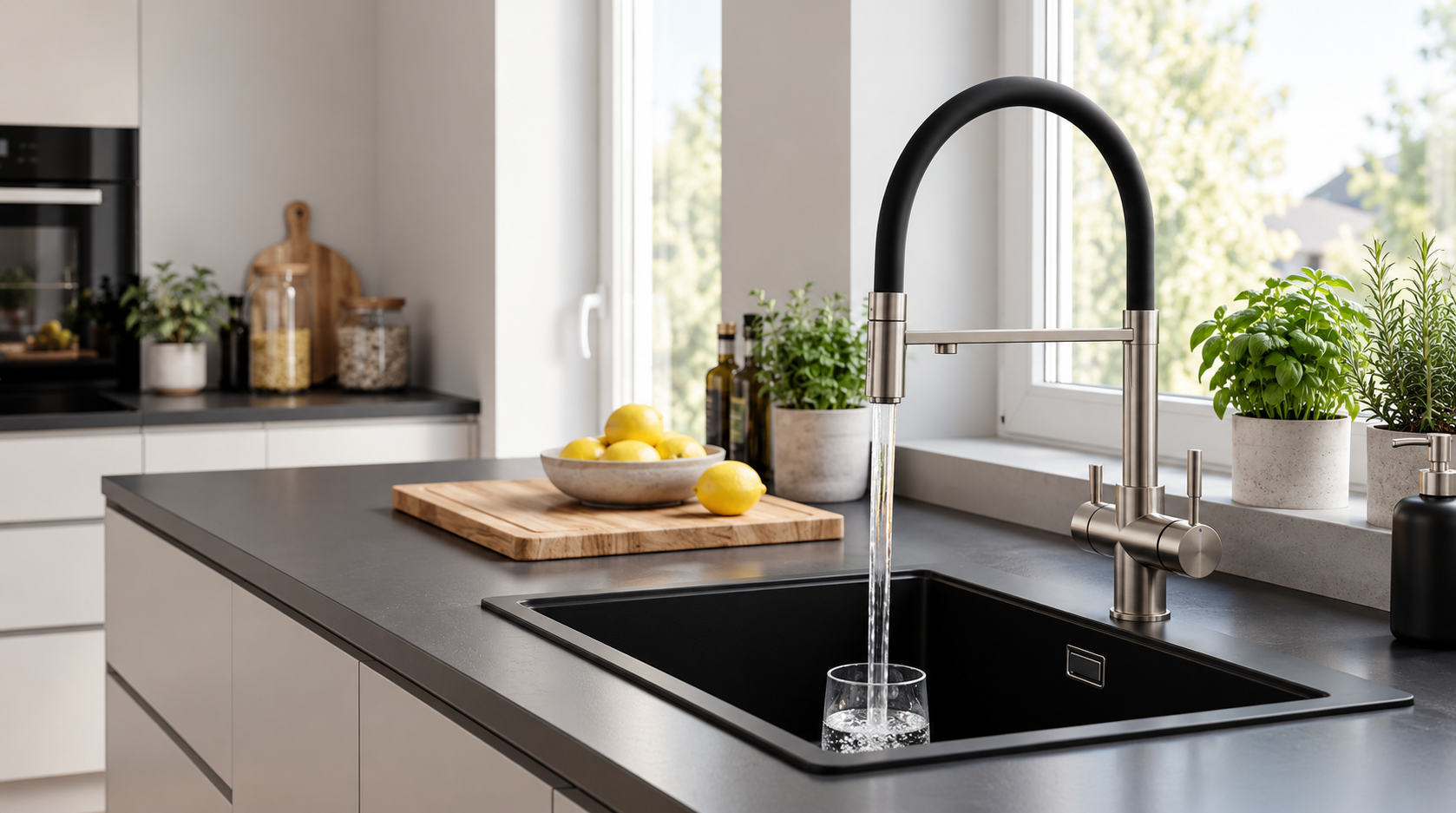
A 3-way filter tap combines hot, cold, and filtered water into a single fitting, but the tap itself is only half the system. Confirm under-sink space, check which filter cartridges the system accepts, and factor in a plumber for the supply line connection before ordering, so the tap you choose actually fits what's happening beneath the counter.
FAQ
Does a 3-way filter tap need a separate hole in the sink?
No. It mounts through a single hole, the same as a standard single-hole mixer tap, since the filtered water path runs internally through the tap body rather than through a separate fitting.
How often does the filter cartridge need replacing?
Typically every 3-6 months, depending on the cartridge's rated capacity and household water use. Check the specific cartridge's stated interval, since this varies between manufacturers and cartridge types.
Will low water pressure affect a 3-way filter tap?
Yes, potentially. The filter cartridge adds resistance to flow, so households with naturally low mains pressure, common in older properties or upper floors, may notice a slower fill rate specifically from the filtered setting, even if hot and cold water pressure feels normal.
Can I install a 3-way filter tap myself?
The tap mounting itself is similar to any single-hole tap, but the filter unit requires a tee connection into the cold water supply line under the sink. This is worth having a qualified plumber handle unless you're confident working with water supply connections, since an incorrect fit risks a leak under the cabinet.
Do all 3-way taps use the same filter cartridges?
No. Some are built for a specific manufacturer's proprietary cartridge system, which means future replacements need to come from that same source. Others accept a wider range of standard cartridge types. Check this before buying, since it affects ongoing replacement cost and availability.
How much space does the filter unit need under the sink?
Roughly 20-25cm of vertical clearance plus a flat mounting surface is typical, though this varies by system. Measure your actual under-sink cabinet space before ordering, especially if it's already crowded with a waste disposal unit, water softener line, or bin system.
What does a filter cartridge actually remove from the water?
Chlorine and sediment are standard across most cartridges. Limescale reduction, microplastics, and other specific contaminants vary by cartridge type and aren't universal, so check the specific cartridge's filtration specification if a particular contaminant is a priority.


